 GONGYI BAOYUAN MACHINERY.CO.LTD


搜索您想要的
搜索所有产品新闻
搜索
化学法是生产活性炭的常用方法,其活化效果好,生产成本低。磷酸作为一种化学活化剂,在活性炭生产中起着关键作用,它能显著改善炭的孔隙结构和比表面积,从而提高活性炭的吸附性能。
原料被粉碎成≤ 4mm 的锯末。然后进入烘干机将水分烘干至 10-15%。干燥后的锯末经过筛分,筛出大于 4mm 的颗粒。
原材料和磷酸按规定比例混合搅拌。锯末具有较大的比表面积,可在短时间内湿润。
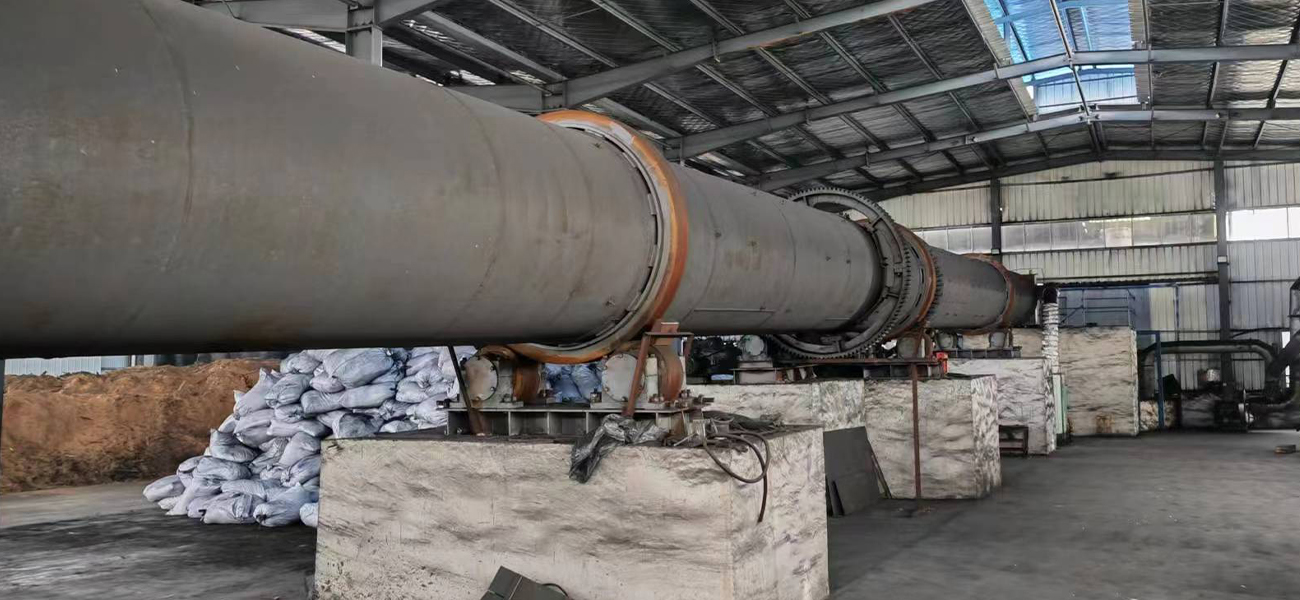
混合后的材料被送入活化炉。材料经过以下阶段
低温阶段(100-200°C):磷酸脱水和原料初步碳化。
高温阶段(400-600°C,通常为 450-550°C):磷酸催化氧化反应,形成微孔和介孔结构。活化后的活性炭进入水洗槽进行水洗,以清洗活性炭中的磷酸。
磷酸在整个过程中会发生以下变化:
低温阶段(100-200°C):脱水和酯化 物理变化:
液态磷酸(H₃ PO₄)渗入原材料(如锯末),并通过毛细作用均匀分布。
水逐渐蒸发,磷酸浓度增加,形成一层粘稠的液膜包裹纤维素纤维。
化学变化:
脱水反应:磷酸释放出 H⁺,与纤维素中的羟基 (-OH) 反应生成磷酸酯(纤维素-OPO₃ H₂)
并去除水分:
纤维素-OH + H₃ PO₄ → 纤维素-OPO₃ H₂ + H₂O 纤维素-OH + H₃ PO₄ → 纤维素-OPO₃ H₂ + H₂O
酯键形成:破坏纤维素的结晶结构,使其更容易热解,并通过交联固定碳骨架,防止过度收缩。
中温阶段(200-400°C):分解和交联 物理变化:磷酸部分脱水形成缩合酸,如焦磷酸(H₄ P₂O₇)和多磷酸(H₅ P₃O1₀)。原料开始碳化,挥发性有机物(如焦油)受到磷酸的抑制,从而减少孔隙堵塞。化学变化:酸催化裂解:磷酸可加速纤维素和木质素的热解,产生 CO、CO₂ 和小分子有机物,形成初始孔隙。交联稳定性:磷酸与碳骨架形成 P-O-C 键,增强碳结构的机械强度,防止孔隙在高温下塌陷。3.高温活化阶段(400-600°C):氧化和孔隙形成 物理变化:磷酸进一步脱水,部分转化为偏磷酸(HPO₃)和磷氧化物(如 P₂O₅)。碳骨架被磷酸蚀刻,产生大量微孔和介孔结构。
化学变化:
氧化反应:磷酸是一种氧化剂,可促进碳的氧化,生成 CO₂并扩大孔隙:
C + H₃ PO₄ → CO₂↑ + H₂O + 磷酸盐 C + H₃ PO₄ → CO₂↑ + H₂O + 磷酸盐
模板效应:磷酸及其缩合产物在碳化过程中占据空间,在清洗后留下孔隙(类似于 "牺牲模板")。
冷却和洗涤阶段:残渣和回收磷酸残渣:
未分解的磷酸以 H₃ PO₄ 或磷酸盐(如 K₃ PO₄、Na₃PO₄)的形式留在活性炭孔隙中。
酸回收:
磷酸通过水洗回收(回收率可达 80% 以上)。
1.The Principle of Phosphoric Acid in Activated Carbon Preparation:
01.Catalytic Hydrolysis and Dehydration
Phosphoric acid catalyzes the hydrolysis of polysaccharides (such as cellulose and hemicellulose) in biomass precursors (such as wood, plant fiber, and sludge) into oligosaccharides or monosaccharides.
At the same time, phosphoric acid catalyzes the dehydration of oligosaccharides and their degradation products, promoting aromatization and forming a graphite-like microcrystalline structure, which is the basis for the high specific surface area and excellent adsorption properties of activated carbon.
Cross-linking Reaction and Pore Formation
Phosphoric acid forms a stable carbon skeleton by cross-linking with biopolymers. It also creates pores through chemical etching and space-filling during the activation process. After removal of the phosphoric acid, the etched channels and the spaces occupied by the phosphoric acid are converted into pores, thereby increasing the specific surface area and pore volume of the activated carbon.
02.Inhibiting Tar Formation
During the carbonization process, phosphoric acid catalyzes the cleavage of macromolecular bonds, reducing tar formation through cyclization and polycondensation reactions. This helps increase the carbon yield of activated carbon and improve its pore structure.
Effect of Phosphoric Acid on the Pore Size Distribution of Activated Carbon
Pore Size: Phosphoric acid activation tends to form micropores smaller than 2 nanometers, endowing the activated carbon with excellent adsorption properties.
Pore Size Distribution: Higher concentrations of phosphoric acid tend to form more micropores, while lower concentrations or mixed activators may produce a wider pore 03.size distribution.
Porosity: Phosphoric acid activation can significantly increase the porosity of activated carbon and its specific surface area, facilitating its application in adsorption, catalysis, and other fields.
2.Applications of Phosphoric Acid-Activated Activated Carbon:
01.Water Treatment: Activated carbon activated with phosphoric acid can be used to remove organic matter, heavy metal ions, and odors from water, improving water quality.
02.Gas Purification: In the gas purification field, activated carbon activated with phosphoric acid can be used to adsorb harmful gases such as sulfur dioxide and nitrogen oxides, reducing air pollution.
03.Food Decolorization: Activated carbon activated with phosphoric acid can be used in the food industry for decolorization and purification, improving food quality and safety.
| Item | 模型 | 容量 | Size |
| Rotary activationFurnace(internal heat type) | Φ1.5m×12m | 1-2t/d | 16000*2300*4000mm |
| Φ1.5m×15m | 2-3t/d | 20000*2700*4500mm | |
| Φ2.0m×18m | 4-5t/d | 22000*3000*4500mm | |
| Φ2.6m×20m | 5-8t/d | 26000*3600*5000mm |
Frequently asked questions about chemical production of activated carbon
本网站使用 cookie 改善您的浏览体验。继续使用本网站即表示您接受使用我们的 cookie。本网站收集的数据在美国处理和存储。

