 GONGYI BAOYUAN MACHINERY.CO.LTD


CERCARE CIÒ CHE SI DESIDERA
Cerca tuttiProdottoNotizie
RICERCA
The phosphoric acid method for producing activated carbon is a commonly used chemical activation process. It mainly uses phosphoric acid as an activator to convert carbon-containing raw materials (such as wood, coconut shells, fruit shells, etc.) into activated carbon with a high porosity structure at high temperature. The following is a brief introduction to the method:

Dehydrating agent: promotes the removal of moisture and volatiles in the raw materials, inhibits tar formation, and reduces carbon loss.
Oxidant: reacts with cellulose and lignin in the raw materials to form a cross-linked structure and expand the pores.
Template effect: phosphoric acid penetrates into the raw materials, leaving abundant pores (mainly mesopores) after pyrolysis.
The raw materials are crushed to a suitable particle size (usually 3-10mm) and impurities are removed.
Impregnation
Mix the raw materials with phosphoric acid solution in a certain proportion and soak for several hours until uniform penetration.
Activation
In an inert atmosphere (such as nitrogen) or oxygen-limited conditions, heat to 400-600℃ for 1-2 hours to allow phosphoric acid to fully react with the raw materials.
Recover phosphoric acid
After activation, wash with water until neutral and recover phosphoric acid (recyclable).
Drying and crushing
The washed activated carbon is dried, crushed, and sieved to obtain the finished product.
High specific surface area: usually up to 1000-1500 m²/g.
Surface oxygen-containing functional groups: phosphoric acid activation will introduce acidic groups and enhance the adsorption of polar substances.
Low activation temperature (compared to physical methods) and low energy consumption.
Controllable pore structure and excellent adsorption performance.
Disadvantages:
Waste acid needs to be treated, and the environmental protection cost is high.
The equipment needs to be resistant to acid corrosion (such as enamel or stainless steel).
Food industry: decolorization, refined sugar solution.
Chemical industry: catalyst carrier, gas purification.
Green alternative: study the activation process of biomass acid (such as citric acid) or low-concentration phosphoric acid.
The phosphoric acid method occupies an important position in the industry due to its high efficiency and controllability, but it needs to balance performance and environmental protection requirements.

How can activated carbon production lines achieve efficient and large-scale production? It covers physical and chemical (phosphoric acid/zinc chloride) processes, and provides equipment selection, environmental protection solutions and industry ap...
Visualizza i dettagli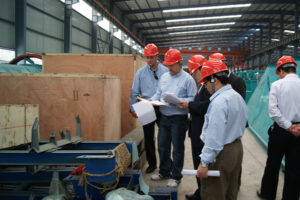
BAOYUAN company provides Canadian customers with a complete set of solutions for activated carbon production lines, covering crushing, activation, and recovery systems, supporting customized needs and compliance with environmental standards.
Visualizza i dettagli
Customized activated carbon kiln specifications according to customer needs, providing full technical solutions from laboratory-level small equipment to large production lines, supporting PLC automation control.
Visualizza i dettagli
Specialized in the production of activated carbon kilns for water treatment, air purification, gold extraction and other fields.
Visualizza i dettagli
Activated carbon kilns designed specifically for coconut shells, wood, coal and other raw materials optimize carbonization and activation processes, improve the adsorption performance of finished products, and provide free raw material testing ser...
Visualizza i dettagli
Il biochar è un materiale ecologico prodotto dalla pirolisi della biomassa che può migliorare la fertilità del suolo, assorbire gli inquinanti e contribuire alla neutralità del carbonio.
Visualizza i dettagliQuesto sito web utilizza i cookie per migliorare la vostra esperienza di navigazione. Continuando a utilizzare questo sito, accettate l'uso dei nostri cookie. I dati raccolti da questo sito web vengono elaborati e conservati negli Stati Uniti.

